Call Now

Septic Pumping in Sussex County, NJ
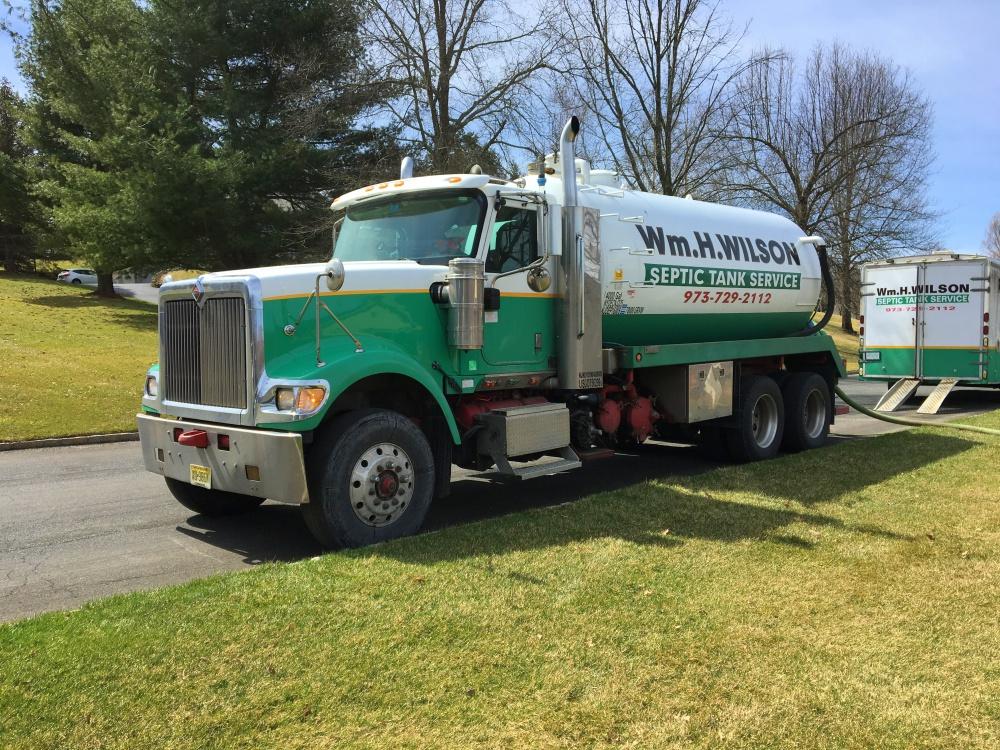
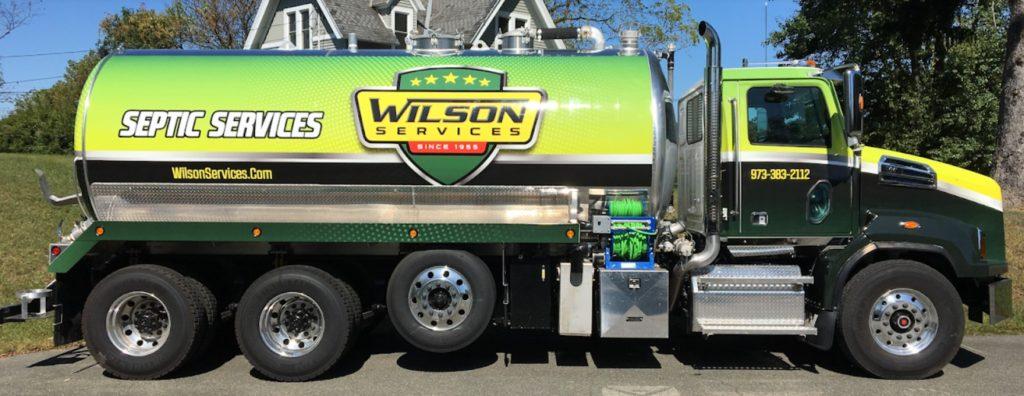
Septic pumping removes the sludge and scum that build up inside your tank so wastewater can keep flowing out to the drain field. Most Sussex County homes need it about every three years. Wilson Services has been pumping tanks across North Jersey since 1955. A pump-out every few years is the simplest way to avoid needing the rest of our septic services. We cover Sussex, Morris, Warren, and Passaic counties from our offices in Sparta and Pompton Lakes.
Book online, get a heads-up call before the truck arrives, and keep a record of every pump-out on file with us.
What Is Septic Tank Pumping?
Everything that goes down a drain in your house ends up in the septic tank first. Heavy solids sink and form a layer of sludge on the bottom. Grease and lighter material float up and form a scum layer on top. The liquid in between flows out to the drain field, where the soil finishes the treatment.
Bacteria in the tank break down some of those solids, but never all of them. Over time, the sludge and scum layers get thick enough that solids start slipping out with the liquid. That’s what clogs filters and seals off drain fields. Pumping uses a vacuum truck to pull the built-up material out so the tank has room to do its job again.
Signs Your Septic Tank Needs Pumping
A full tank usually shows up in the house or the yard before anything breaks. Watch for these:
- Toilets flush slowly and sinks or tubs drain sluggishly all over the house
- Drains or toilets gurgle, especially the ones closest to where the main line leaves the house
- You smell sewage in the yard, near the tank, or around a basement floor drain
- Grass over the tank or drain field is greener or spongier than the rest of the lawn
- The alarm on your pump tank keeps going off
- Your last pump-out was three or more years ago, or nobody knows when it was
If any of these sound familiar, book a pump-out online or call our office to get on the schedule. If wastewater is already coming back up into the house, stop using water and call for emergency septic pumping instead of waiting for a routine appointment.
What’s Included in a Wilson Pump-Out
A standard visit covers more than running a hose into the tank. Here’s what you can expect:
- Locating and uncovering the tank lid, including digging it out if there’s no riser
- Pumping out the liquid, the floating scum, and the settled sludge
- A visual check of the tank walls, both baffles, and the lid
- Checking the effluent filter on systems that have one
- A heads-up before any extra work if we find damage, so nothing happens without your OK
- A service record saved under your street address
Some lake communities run septic management programs, like the Lake Mohawk and Cranberry Lake districts in Sparta and Byram. If you live in one, tell us when you book. We can handle the proof-of-pumping paperwork your township needs.
Septic Pumping vs. Septic Tank Cleaning
A standard pumping removes the liquid along with the floating scum and loose sludge. For most routine three-year visits, that’s all your tank needs.
A full cleaning goes further. We remove all of the liquid, then break up and pull out the compacted sludge stuck to the bottom of the tank. That cuts down on wear and gives the tank its full working capacity back.
Our rule of thumb is to alternate between the two. A cleaning is usually worth the extra cost if your tank has gone longer than it should between visits, or if the technician sees heavy compacted sludge. If a pump-out doesn’t clear up slow drains or a soggy yard, the drain field may be the problem. That’s where septic remediation or repairs come in.
Why Choose Wilson Services for Septic Pumping in Sussex County
Wilson Services has been pumping septic tanks for Sussex County homeowners since 1955, and the Wilson family still runs it. Dan Wilson is President, and Eric Wilson, who holds a degree in civil engineering, is Vice President. Every pump-out goes into a service record kept by street address, so we can tell you or a future buyer exactly what was done and when. Technicians walk you through what they found, and our office follows up by phone. We work out of two offices, at 201 Houses Corner Road in Sparta and 322 Wanaque Avenue in Pompton Lakes. Licensed and insured, NJ License #13VH4508600.
How Our Septic Pumping Service Works
From booking to the follow-up call, a pump-out takes very little of your time. Here’s how a typical visit goes:
- Book your visit. Use our online pumping booking form or call the office, and we’ll set a date that works for you.
- We find your tank. If we’ve serviced your home before, the location is already in our records. If not, we’ll locate it and mark it out.
- You get a heads-up call. Your technician calls when they’re on the way.
- We pump, inspect, and put your yard back. We dig carefully around the lid, pump the tank, and check the baffles while it’s open. Then we close everything up so your lawn looks the way we found it.
- We follow up. Our office calls to go over the findings, files township paperwork where it’s required, and reminds you when your next pump-out is due.
Booking online takes a couple of minutes, and you can pick a date that fits your week.
Septic Pumping Tips From Our Team
Our blog covers the questions we hear most from Sussex County homeowners. These posts are a good place to start:
- Signs Your Septic Tank Is Full
- How Often Should Septic Tanks Be Pumped?
- Can My Septic Tank Be Pumped During Winter?
- Are Water Softeners Harming Your Septic Tank?
- Why Your New Jersey Septic System Smells After Rain
If you still have questions about your system, call our office and we’ll walk you through it.
Septic Pumping Across Sussex County and North Jersey
Our main office on Houses Corner Road puts us close to most of Sussex County. The Pompton Lakes office covers Passaic County and eastern Morris County. Some of the towns where we pump septic tanks include:
- Sparta and Lake Mohawk
- Byram and Cranberry Lake
- Newton and Andover
- Vernon and Hardyston
- Hopatcong and Stanhope
- Wantage, Frankford, and Lafayette
We also work throughout Warren and Morris counties. If you don’t see your town, call and ask.
Get Your Tank on the Schedule
If it’s been three years or longer, or you’re not sure when your tank was last pumped, now’s a good time to book. Scheduling online takes a couple of minutes. If you’d rather talk to someone, the office is open 7:30 a.m. to 4:00 p.m. Backups don’t keep office hours, so our emergency line is answered 24/7.
Schedule Septic Tank Pumping NowSeptic Pumping FAQs
How often should I have my septic tank pumped in Sussex County?
The Sussex County Health Department recommends pumping every three years, and that’s what we suggest for most households. Bigger families, smaller tanks, and homes with garbage disposals or water softeners may need it sooner. Some lake communities make the three-year schedule mandatory.
Can you pump a septic tank in the winter?
Yes, we pump tanks year-round. Frozen ground and deep snow can make uncovering the lid take longer. If your tank is due, scheduling in the fall is easier on everyone.
How long does septic pumping take?
Once the lid is uncovered, a standard pump-out moves quickly, often well under an hour. Digging out a deeply buried lid or reaching a tank far from the driveway adds time.
I don’t know where my septic tank is. Can you still pump it?
Yes. If we’ve been to your address before, it’s in our records. If not, we can track it down and mark the tank and lines so you’ll know for next time.
Does my town require proof of septic pumping?
Some do. Sparta’s Lake Mohawk district, Byram’s Cranberry Lake area, and West Milford all require pumping at least every three years. Let us know when you book and we’ll take care of the paperwork for your township.
Will pumping fix a septic backup?
Sometimes. In our experience, about half of backups come from an overfilled tank caused by a clogged filter, and pumping plus a filter cleaning solves those. Most of the rest are clogs in the line between the house and the tank. A smaller share are drain field problems that need more than a pump-out.
What can I do to go longer between pump-outs?
Spread laundry out over the week, fix leaky toilets and faucets, and only flush toilet paper. Keep grease out of the sink. If your system has an effluent filter, having it cleaned every six months keeps solids out of the drain field.
Should I have my septic tank pumped before selling my house?
It’s a good idea. Buyers will usually order a septic inspection, and the tank typically needs to be pumped so the inspector can see inside. Having recent records on file makes the process smoother.


Always fair and professional and honest. Highly recommend

Great service once again emptying the septic tank. Appointment scheduled quickly. Price is reasonable. Technician was great too. Glad to be all set for another few years!

Had some communication issues regarding our septic tank cleaning but Matthew, the Operations Manager handled the situation very well. I really appreciated the time he took in explaining things and how he listened to my concerns and questions. I loved the ease of booking an
Read more

Taylor always gets the job done easy and quick! Thanks again for providing excellent service!

Septic system pump and submit paperwork to LMCC office. Simple process with no drama. See you again in 3 years.

The technician that came out to our home he was so respectful and so knowledgeable of the procedure and explained so we understood. Wilson Services has the most professional customer service dept . Debra who is a supervisor was so patient and professional that I felt at ease

Taylor came out to pump my tank and he was patient and knowledgeable and explained everything to me in an easy to understand way. I would 10/10 recommend him!

I am sorry I did not take the name of the gentleman who help me. He was totally professional and did a great job. I like Wilson because they are always on time and they do a very professional job. Thank you

Prompt and timely service. Technician was very friendly and diligent in his work. Wilson Services provides quality and affordable service. Highly recommend.

I have been using Wilson Services for my Septic system for the past 10 years. Phenomenal customer service , easy scheduling and very flexible. The guys that come to your house will answer any questions you have about your septic system and give you their honest opinion about
Read more
I had another good experience using Wilson Services for my septic pumping. They are always very punctual and efficient. The techs are very knowledgeable thorough and professional. Everything went smoothly. I would highly recommend calling Wilson for your septic needs.

I scheduled pumping of my septic online. The representative came to dig up the site, following by another representative who came to pump the septic. I made payment to driver via CC when he was done. It was a seamless process.

Scheduling was easy and convenient, and they were able to fit the service into my schedule. The technician was friendly, the service was fast, and the price was very fair. Even payment afterward over the phone was simple and hassle-free.

Wonderfully professional and prompt service. Booking is so simple via their online portal. Subsequent scheduling is a breeze. And they were in and out within 20 minutes. Would recommend to a friend

Wilson Services was excellent to work with! As new homeowners we were nervous when our pump tank alarm went off and called Wilson to make an appointment. They were very friendly, helpful and prompt. They assured us all was in working order and left us feeling good about working
Read more
I've used Wilson Services 3 times for the past few years and I trully recommended them. Fast, reliable and very professional.

The driver Taylor, was professional courteous ,on time. I can’t say enough about the man in a positive way ,was refreshing to actually see someone do a job correctly. Do a job thoroughly and be pleasant at the same time. This man is deserves a raise . The follow up to the
Read more
Cannot recommend highly enough! I have used several different places for septic service but after today I am only Using Wilson services. The technician, John B was professional, and went above and beyond to help us. I find Wilson services to be very trustworthy, very
Read more
We had our septic tank pumped 11/26. That evening we had a problem with the toilet not flushing, and water backing up. Mind you this is the night before Thanksgiving! We called and they came cleared the blockage we had, I feel they charged us minimally considering the time and
Read more
Septic cleaning. Phone discussion; Staff is always pleasant and friendly. Taylor was my technician; he gave me a heads up call to let me know he was on his way (that’s very helpful). Highly recommend Taylor and Wilson services.

Wilson had always been professional, on time, and does outstanding work. They are the go to for services

Taylor was very nice and efficient. Did a good job
Contact us to get started!