 Call Now
Stinging Insect Control & Nest Removal in Sussex County, NJ
Wilson Services is a family-owned Sussex County pest control company offering wasp nest removal, along with hornet, yellow jacket, carpenter bee, and general stinging insect control. When a nest goes from an annoyance to an active safety problem, we prioritize the call.
Most Sussex County homeowners are seen ASAP. Nest active right now? Call us for a FREE estimate.
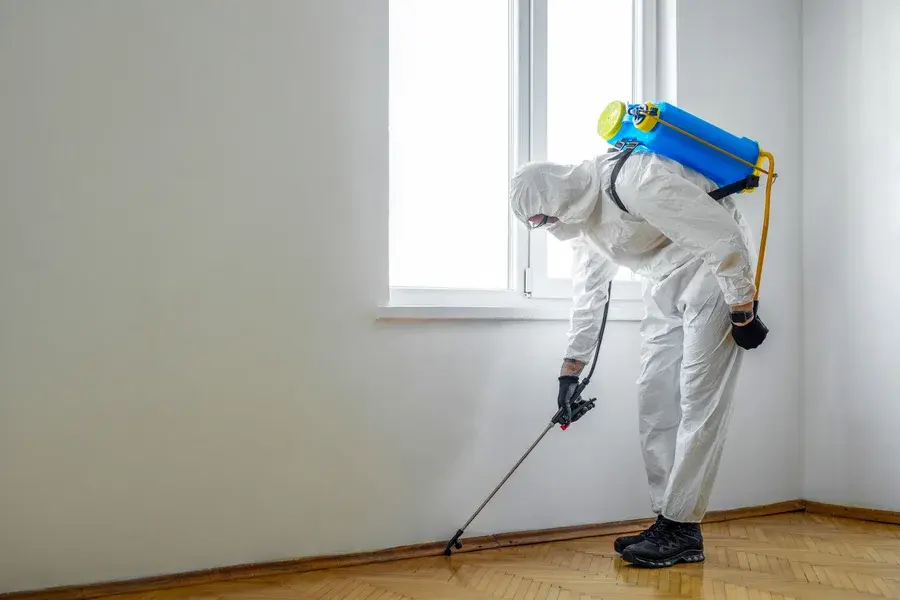
Wilson Services isn’t a franchise. An active nest gets handled by someone who works directly for the company, identifies the species before choosing a product, and tells you straight what can be removed and what has to be treated in place.
- Family-owned and operated — not a national franchise or contractor
- Priority scheduling for active nests near doorways, walkways, and play areas
- Species-specific treatment and timing — a ground nest isn’t handled like a soffit nest
- Honeybees referred to a local beekeeper for live relocation, not exterminated
Stinging Insects Common in Sussex County, NJ
Stinging insect problems in Sussex County follow a predictable seasonal pattern, but different species call for different treatments. A paper wasp nest under an eave isn’t handled the same way as an in-wall yellow jacket colony. Correct identification matters, so if you’re not sure what you’re looking at, send us a photo when you call.
- Paper wasps — Small, open-comb umbrella-shaped nests under eaves, deck railings, playground equipment, mailbox posts, and grill lids. Less aggressive than yellow jackets but will defend the nest hard if disturbed. Common May through October.
- Yellow jackets — The most aggressive stinging insect in Sussex County and behind most of our late-summer calls. They nest in ground holes, old rodent burrows, wall voids, stone walls, and occasionally attic corners. Activity peaks in late August and September, when a single ground nest can hold thousands of workers.
- Bald-faced hornets — Not technically hornets, but a large aerial-nesting yellow jacket. You’ll recognize the nest before the insect: a gray papery football or basketball hanging from a tree, shrub, or the side of a house. Can reach soccer-ball size by August with several hundred workers.
- European hornets — Up to 1.5 inches and active at night, which is unusual for stinging insects. Attracted to porch lights and windows. Nests turn up in hollow trees, wall voids, or unused chimneys.
- Carpenter bees — A different problem entirely. They look like fat bumblebees but drill perfectly round half-inch holes into unpainted wood. Damage matters more than stings here.
- Honeybees — A tight, golf-ball-sized cluster of golden-brown bees on a branch or wall is a job for a local beekeeper, not an exterminator, since honeybees are pollinators that can usually be relocated alive. Call and describe what you’re seeing. If it’s honeybees, we’ll connect you with a beekeeper; if it turns out to be yellow jackets or hornets instead, which is common, we’ll handle it.
Our Stinging Insect Control Services in Sussex County, NJ
Wilson Services treats the full range of stinging insect pressure Sussex County homes deal with from spring through fall. Here’s what that looks like in practice.
Wasp Nest Removal
Paper wasps build most of the nests we remove across Sussex County, favoring sheltered spots like eaves, soffit corners, fence tops, grill lids, unused playsets, and patio umbrella folds. Nests start small in May and June and grow larger by August.
Our wasp removal process:
- Treatment of the nest and immediate area to eliminate the colony
- Physical removal when the nest is safely accessible — eaves, grills, outdoor furniture
- Residual treatment where reinfestation risk is high, like a favored eave or fence line
Yellow Jacket & Hornet Nest Removal
Yellow jacket and hornet problems are where urgency matters most. A ground nest disturbed by a lawnmower, kids, or a dog can land someone in the ER. A bald-faced hornet nest near a doorway needs attention, not a wait-and-see approach. These are the calls we prioritize.
- Ground yellow jacket nests — The most common yellow jacket problem here, usually a fist-sized hole in the yard with insects going in and out. Treatment goes into the entrance and eliminates the colony from the inside out, typically in the evening or early morning when workers are inside.
- In-wall yellow jacket colonies — First spotted as insects moving through a crack in siding, a soffit gap, or a mortar joint. These can’t be removed without opening the wall, so we treat in place. Don’t seal the entry point until treatment takes effect, or workers may find another way out — sometimes into the living space.
- Bald-faced hornet nests — Bald-faced hornets can throw a defensive attack from 10-plus feet, so treatment uses the right protective equipment at the right time of day. Once treated, the nest can usually be removed the next day.
- European hornets — Less common but a real problem in a wall or chimney. Treatment is similar to in-wall yellow jackets, and we’ll walk you through it.
Carpenter Bee Treatment
Carpenter bees are a different problem from wasps and hornets. They’re not aggressive — females can sting but rarely do, and the males dive-bombing your head near the deck don’t have stingers at all. The real damage is structural. They drill perfectly round half-inch holes into unpainted wood (decks, fascia, cedar siding, unfinished eaves, railings) and excavate long galleries to lay eggs. Left untreated, the wood gets riddled with tunnels, and woodpeckers pull chunks out looking for larvae.
Our approach:
- Direct treatment into visible gallery entrances
- Perimeter treatment on high-target wood surfaces
- Return service if new drilling appears within the treatment window
If you’re seeing damage year after year, the long-term fix is painting or sealing the wood, since carpenter bees strongly prefer unfinished, weathered surfaces. We’ll flag this at the estimate.
Why You Shouldn’t Remove a Stinging Insect Nest Yourself
Every summer we get calls from homeowners who tried a can of hardware-store spray and made things worse. Aerosols typically don’t reach the nest interior, so surviving workers end up agitated and defending harder. In-wall colonies are especially risky: a poorly applied spray can drive workers deeper into the wall, sometimes into the living space.
There’s also the allergy factor. About 3% of adults have a genuine sting allergy, and many don’t know it until they’ve been stung multiple times. A yellow jacket ground nest attack can deliver dozens of stings in seconds. This isn’t a spot to cut corners on.
If you already tried a can of spray and made things worse, let us know when you call. That changes how we approach the treatment.
What to Expect from Your Stinging Insect Exterminator in Sussex County, NJ
Our stinging insect calls follow a tight, urgency-first process.
- Phone Call — Describe what you’re seeing, where the nest is, and how long it’s been active. A photo helps. Active stinging insect problems get priority scheduling.
- Same-Week Estimate or Treatment — For most Sussex County calls, we can be out within a few business days, often sooner for urgent situations near doorways or walkways.
- Treatment On-Site — A trained Wilson Services exterminator treats the nest with the right product and protective equipment for the species. Timing — evening, morning, or mid-day — depends on colony behavior.
- Nest Removal Where Possible — Accessible nests get physically removed. Nests inside walls, soffits, or hard-to-reach eaves get treated but stay in place, and we’ll be clear about which situation you’re in.
- Follow-Up — For high-pressure locations, like a soffit that’s had a nest three summers running, we recommend a preventive treatment schedule so it doesn’t come back next year.
Sussex County, NJ Service Area
Wilson Services provides wasp, hornet, yellow jacket, and carpenter bee removal across Sussex County, including Newton, Sparta, Vernon, Hopatcong, Andover, Hamburg, Wantage, Lafayette, Franklin, Hardyston, Stanhope, Byram, Frankford, Montague, Ogdensburg, Branchville, Sussex Borough, Stillwater, Green Township, Fredon, and the surrounding communities. If you’re in Sussex County and need stinging insect control fast, give us a call — we likely already service homes on your road.
FAQs About Stinging Insect Removal in Sussex County, NJ
How quickly can you come out for an active nest?
For most Sussex County calls, we schedule within a few business days. Genuinely urgent situations — a nest by a front door, on a play set, or an in-wall colony starting to enter the house — get prioritized. Call and describe what you’re dealing with and we’ll be honest about scheduling.
Will you remove the nest, or just treat it?
Both, when possible. Nests that are physically accessible, like under eaves, on grills, on outdoor furniture, or in shrubs, get treated and then removed. Nests inside walls, high on second-story eaves, or otherwise unreachable get treated in place — the colony dies out, but the nest material stays. We’ll tell you which situation you’re in before we start.
Is treatment safe for kids and pets?
Yes, with normal post-treatment precautions. We keep the area clear during application and for a short period after. Products go on targeted zones, like the nest and immediate structure, rather than across the whole yard. If a pet or child gets near a treated nest after we leave, the ground residual isn’t a hazard the way an active colony would be.
What if I already sprayed the nest myself and it’s worse?
Tell us on the phone. A partially sprayed, agitated colony behaves differently than an untreated one. Workers may be defending more aggressively, some may have relocated to a secondary spot, and the residual on the nest can affect how our product performs. We can still handle it, but we want to know what we’re walking into.
Will they come back next year?
Some spots get repeat activity: favorable eaves, hollow tree stumps, ground burrows, soffits with the same access gap. For repeat locations, we recommend a preventive treatment early the following spring so the queen doesn’t establish a new colony there. For one-off nests, next year is usually a clean slate.
Do you treat honeybees?
Not typically. Honeybees are pollinators and, when possible, should be relocated alive by a beekeeper rather than exterminated. If you describe what turns out to be actual honeybees, we’ll point you to a Sussex County beekeeper who handles live relocation. If it’s yellow jackets, hornets, or wasps — the more common answer — we’ll take care of it.
When is the best time to treat carpenter bees?
April through June, during the active drilling and egg-laying window. Treatment applied later in the season is less effective because the damage is already done for the year. If you’ve had carpenter bee activity in past springs, calling early is worth it.
Get Help with a Stinging Insect Nest Today
With us, expect same-week responses for active nests, backed by a trained exterminator who knows the species and the property types across Sussex County. If wasps, yellow jackets, hornets, or carpenter bees are giving you trouble, give us a call before the nest gets bigger and the problem gets riskier. Book an appointment today.
Recent Comments